
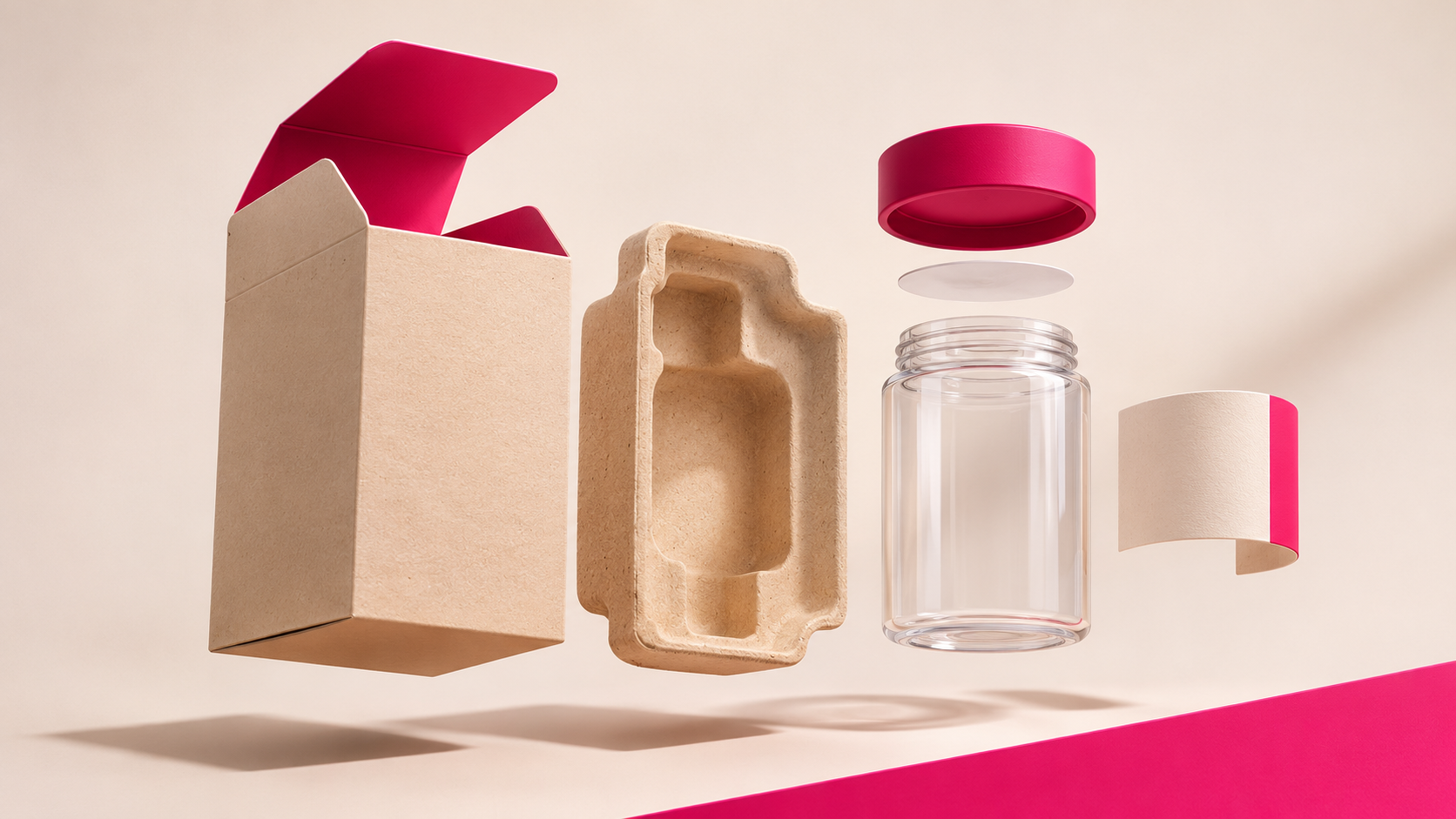
When developing a new product, businesses often begin packaging design by asking how the product can stand out on a shelf, communicate the brand, and encourage purchase. Those questions remain important. But as material choices, production systems and environmental requirements evolve, another question deserves a place in the brief: where does the packaging go once the product has been used?
The answer can shape material selection, structure, manufacturing and the experience a brand delivers.
Packaging requirements are changing
The European Union’s Packaging and Packaging Waste Regulation (PPWR) began to apply on 12 August 2026, with obligations introduced on different timelines. It addresses waste prevention, packaging design, reuse and recycling. Businesses supplying the EU should identify the applicable requirements for their products rather than assume that every obligation became effective at once.
In Thailand, the GIZ-supported MA-RE-DESIGN project and TIPMSE have been developing design-for-recycling guidance. Thailand’s Food and Drug Administration also opened consultation on proposed amendments to plastic food-contact packaging requirements in September 2026. These are proposals, not a claim that the revised rules have already become law. Both developments illustrate why technical constraints belong in the design brief.
Sustainability is not a visual style
Kraft paper, muted green colors and natural-looking textures can communicate a particular visual identity, but they do not demonstrate environmental performance. A laminated paper carton may be difficult to process in some waste systems, while some plastic formats may have established collection and recycling routes. Material decisions should consider product protection, local infrastructure and evidence, rather than appearances alone. Avoid making environmental claims without verifying them.
One package has several stages of life
Before it reaches the customer
Packaging must be manufactured, assembled, filled, stored and transported. A distinctive shape may improve recognition but also require custom tooling or greater storage volume. Designers should understand suppliers, production methods and distribution constraints before committing to a structure.
During use
Packaging should protect its contents, communicate information, and be easy to handle. Removing material without accounting for strength, hygiene or product damage may create other impacts. The objective is appropriate material use, not simply the smallest possible amount.
After use
Can customers separate components? Is the material accepted in local collection systems? Are labels and instructions understandable? These questions help the design team assess end-of-life options. Technical recyclability does not guarantee that an item will actually be collected or recycled.
Five questions before commissioning packaging design
1. Function: What protection, shelf life, handling and information does the product require?
2. Production: Can suppliers manufacture the proposed structure at the required volume and cost? What testing is necessary?
3. Components: Do decorative layers, secondary cartons or wraps deliver enough value to justify their use?
4. End of life: How will customers separate, reuse or dispose of packaging in the intended market?
5. Expansion: What labeling, documentation and material requirements would apply if the business entered a new market?
When should designers become involved?
Commissioning graphics after every structural decision has been made can work for a visual refresh. New packaging development benefits from earlier collaboration between designers, manufacturers, marketing teams and material specialists. Prototypes allow the team to compare options and investigate trade-offs before committing to tooling or a production run.
Design beyond the shelf
Appearance matters because packaging is a point of contact between a brand and its customers. But good packaging design also considers what happens at the factory, in distribution, during use and after disposal. By bringing these questions into the brief, businesses can pursue a coherent design that responds to real constraints rather than treating sustainability as decoration.
Explore Industrial Design, Brand Identity and Graphic Design.
References: European Commission, 11 August 2026; GIZ Thailand, September 2026; SGS, October 2026; Food Packaging Forum, November 2026.